

Hurghada’s Transformation: Analysis of Greening an Egyptian Tourism Center
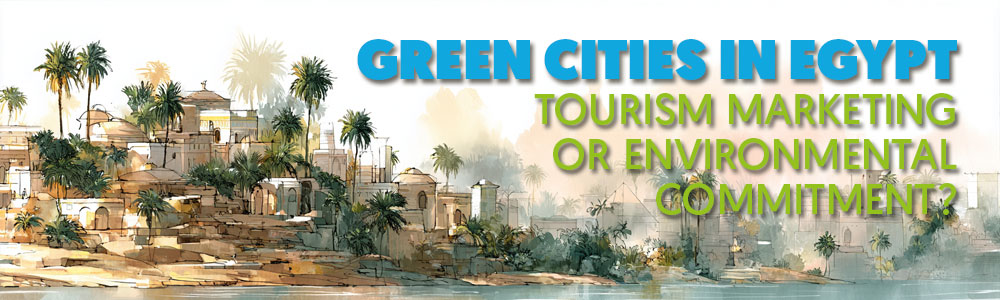
Hurghada, once a small fishing village on Egypt’s Red Sea coast, has transformed into a vibrant tourism center known for its beautiful beaches and marine attractions. In recent years, the city has also drawn attention for its growing number of green spaces, landscaped areas, and environmental initiatives. This raises an important question: Are these „green city” efforts in Hurghada an authentic environmental commitment, or merely aesthetic improvements designed to attract foreign tourists?
Exclusive Interview with Egypt’s Minister of Environment
In an exclusive interview, H.E. Dr. Yasmine Fouad, Minister of Environment for the Arab Republic of Egypt, shares her insights on the environmental transformation of coastal tourism cities, with a particular focus on Hurghada.
„Egypt’s approach to environmental management, particularly in our tourism destinations, has evolved significantly over the past decade,” explains Minister Fouad. „What began primarily as beautification efforts in tourist areas has transformed into a comprehensive strategy that considers both environmental sustainability and community development.”
Dr. Fouad acknowledges that the initial greening initiatives in cities like Hurghada were largely driven by tourism considerations. „We cannot deny that tourism was the main factor in our coastal development strategies. The economic significance of this sector naturally influenced our early environmental planning. However, our vision has expanded considerably since then.”
Evolution of Environmental Policy
Minister Fouad highlights key policy changes that have guided Egypt’s approach to environmental management in tourism-dependent areas.
„When I took office, one of my priorities was to integrate environmental considerations into every aspect of urban development, not just in areas visible to tourists,” says Dr. Fouad. „Climate change does not discriminate between tourist resorts and residential neighborhoods. Our environmental policy must be equally comprehensive.”
The Minister points to Egypt’s National Strategy for Climate Change Adaptation and Disaster Risk Reduction, which includes specific provisions for coastal cities like Hurghada.
„Under our national strategy, we have established clear guidelines ensuring that green infrastructure benefits all residents. These include mandatory green space allocations in new developments, water conservation requirements, and incentives for using native plant species that are adapted to our arid climate.”
Water Management: A Key Challenge
Dr. Fouad emphasizes that water management remains one of Egypt’s most pressing environmental challenges, particularly in developing green spaces in arid regions.
„Egypt is a water-scarce country, and climate change is exacerbating this challenge. Creating sustainable green spaces in cities like Hurghada requires innovative approaches to water conservation and reuse,” explains the Minister.
„In Hurghada, we have implemented wastewater recycling systems that now provide irrigation for approximately 60% of the city’s public green spaces. This represents a significant achievement, reducing pressure on our limited freshwater resources while allowing for the expansion of urban greenery.”
She adds: „We are also promoting drought-resistant native plant species that require minimal irrigation. This shift from imported ornamental plants to native species represents both an environmental and cultural benefit, as it showcases Egypt’s rich natural heritage.”
Community Engagement and Local Initiatives
Minister Fouad points to growing community involvement as evidence of authentic environmental commitment beyond tourism marketing.
„One of the most encouraging phenomena I’ve observed is the development of local environmental initiatives. Communities in Hurghada are taking responsibility for their environment through neighborhood greening projects, beach cleanups, and educational programs. This grassroots engagement is essential for lasting environmental change.”
The Ministry of Environment supports these efforts through the „Green Egypt” initiative, which provides technical and financial support for community-led environmental projects.
„We believe that sustainable cities can only be achieved when environmental protection becomes a shared responsibility. Our role as a ministry is to provide the framework, resources, and expertise to empower local communities in their environmental efforts.”
Beyond Tourist Districts
Asked about disparities between tourist areas and residential neighborhoods, Dr. Fouad acknowledges challenges while highlighting recent progress.
„Historically, there has been an imbalance in the distribution of green spaces between tourist zones and residential areas in our coastal cities. This is a legacy issue that we are actively addressing through our urban planning policies,” she explains.
„Egypt’s Sustainable Development Strategy: Egypt Vision 2030 specifically targets this disparity. We have established minimum green space requirements per capita that must be met across all urban areas, regardless of their tourism profile. In Hurghada, our recent urban development plan allocates 35% of new public infrastructure investments to previously underserved neighborhoods.”
Climate Resilience and Planning for the Future
Looking ahead, Minister Fouad emphasizes the role of green cities in Egypt’s climate change adaptation strategy.
„Cities like Hurghada are on the front lines of climate change impacts, including sea-level rise, extreme heat, and water scarcity. Greening cities is not just about aesthetics or tourism—it’s a crucial adaptation strategy that increases resilience to these challenges.”
The Ministry is currently developing climate vulnerability assessments for coastal cities that will shape future urban planning decisions.
„We are moving beyond the old paradigm where environmental considerations were added as an afterthought in urban development. In our current approach, ecological sustainability is a fundamental element of all urban planning, particularly in vulnerable coastal areas like Hurghada.”
Conclusion: A Strategic Transformation
Dr. Fouad concludes with a reflection on the transformation she has witnessed in Egypt’s approach to green urban development.
„The journey of cities like Hurghada represents Egypt’s broader environmental evolution. While tourism may have provided the initial motivation for urban greening, today’s initiatives are driven by a more comprehensive understanding of environmental sustainability and its importance for all Egyptians.”
„A truly green city serves not only its guests but primarily its residents. It conserves natural resources for future generations and builds resilience to environmental challenges. This vision guides our work at the Ministry of Environment, and I am encouraged by the progress we are observing in Egypt’s cities, including Hurghada.”
Minister Fouad’s insights reveal that while Egypt’s green city initiatives in tourist destinations began with an emphasis on attracting visitors, they have evolved into more substantive environmental programs that increasingly benefit local communities and address long-term sustainability challenges. This evolution reflects Egypt’s growing commitment to environmental protection as an integral part of the country’s development policy.